Table of Contents
ToggleTop alternative education options continue to grow in popularity as more families question the one-size-fits-all approach of traditional schooling. Some students thrive in conventional classrooms. Others don’t. And that’s perfectly okay.
Whether a child learns best through hands-on projects, self-paced study, or creative exploration, alternative education models offer paths that honor different learning styles. This guide breaks down the most popular options, from Montessori and Waldorf schools to homeschooling and online programs. Each approach has distinct strengths, and understanding them helps families make informed decisions about their children’s futures.
Key Takeaways
- Top alternative education options like Montessori, Waldorf, homeschooling, and online schools offer paths that honor different learning styles.
- Montessori education emphasizes child-led learning with hands-on materials, while Waldorf schools focus on creativity, imagination, and holistic development.
- Homeschooling provides maximum flexibility and has grown significantly, with over 3.3 million U.S. students learning at home before the pandemic surge.
- Unschooling trusts children to direct their own learning through real-world experiences and natural curiosity rather than set curricula.
- Online and virtual schools offer schedule flexibility and access to courses unavailable locally, though they require strong self-discipline.
- Choosing the right top alternative education approach depends on your child’s learning style, social needs, family values, and available resources.
Montessori Education
Montessori education ranks among the most recognized forms of top alternative education worldwide. Developed by Dr. Maria Montessori in the early 1900s, this method centers on child-led learning within a structured environment.
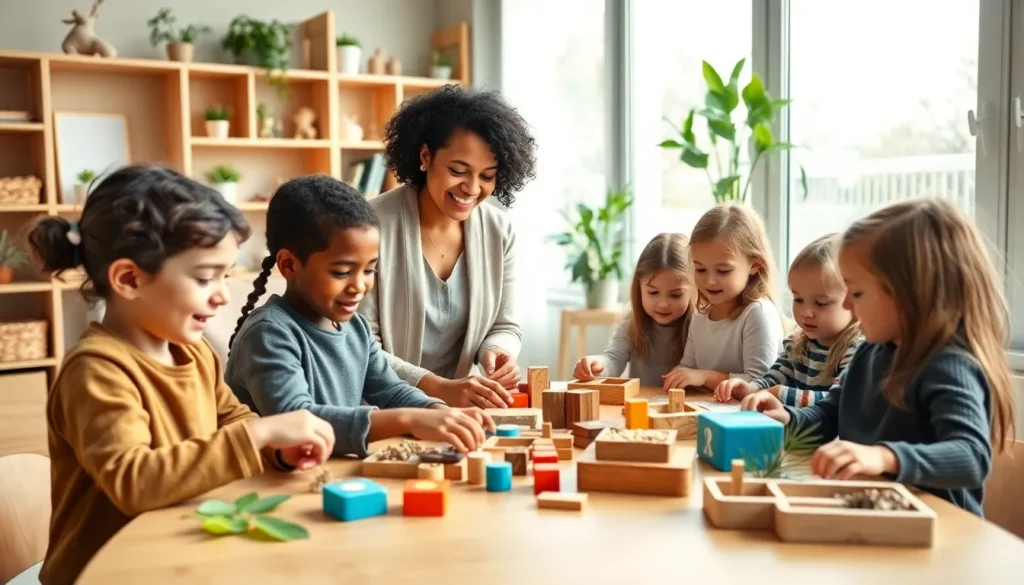
In a Montessori classroom, students choose their activities from a range of options. Teachers serve as guides rather than lecturers. Mixed-age groupings allow younger children to learn from older peers, while older students reinforce their knowledge by teaching concepts to others.
Key features of Montessori education include:
- Hands-on learning materials designed for self-correction
- Uninterrupted work periods lasting two to three hours
- Freedom of movement within the classroom
- Emphasis on practical life skills alongside academics
Research supports the effectiveness of this approach. A 2017 study published in Frontiers in Psychology found that Montessori students showed stronger academic outcomes and social development compared to peers in conventional schools.
Montessori programs exist for children from infancy through high school, though elementary programs remain most common. Families drawn to this top alternative education model often value independence, intrinsic motivation, and respect for each child’s developmental pace.
Waldorf Schools
Waldorf schools offer another respected form of top alternative education. Rudolf Steiner founded the first Waldorf school in Germany in 1919. Today, over 1,200 Waldorf schools operate in more than 60 countries.
This educational philosophy emphasizes imagination, creativity, and holistic development. Academic learning integrates with arts, music, movement, and practical crafts. Waldorf educators believe children pass through distinct developmental stages, and curriculum follows these natural rhythms.
Distinctive elements of Waldorf education include:
- Delayed academics, formal reading instruction typically begins around age seven
- Main lesson blocks where students study one subject intensively for several weeks
- Limited technology use, especially in early grades
- Strong emphasis on storytelling, drama, and artistic expression
- Same teacher stays with a class for multiple years
Critics sometimes question the delayed reading approach. But, proponents argue that children who develop strong oral language and imaginative capacities first often become enthusiastic readers later. Waldorf schools attract families who prioritize creativity, community connection, and a slower-paced childhood.
Homeschooling
Homeschooling represents perhaps the most flexible form of top alternative education available. Parents assume primary responsibility for their children’s instruction, though approaches vary dramatically from family to family.
The homeschool population has grown steadily over decades. The National Center for Education Statistics estimated approximately 3.3 million homeschooled students in the United States as of 2016, and numbers surged significantly during and after the COVID-19 pandemic.
Homeschooling families choose this path for various reasons:
- Religious or philosophical beliefs
- Dissatisfaction with local school options
- Children with special learning needs
- Desire for schedule flexibility
- Travel or performance careers
Homeschool curricula range from structured, textbook-based programs to eclectic mixes of resources. Some families join homeschool co-ops where parents share teaching duties. Others hire tutors for specific subjects like advanced math or foreign languages.
Legal requirements for homeschooling differ by state. Some states require standardized testing or portfolio reviews. Others have minimal oversight. Families considering this top alternative education option should research their state’s specific regulations.
Unschooling and Self-Directed Learning
Unschooling takes the principles behind top alternative education to their logical extreme. This approach, popularized by educator John Holt in the 1970s, trusts children to direct their own learning based on natural curiosity and interests.
Unschooling doesn’t follow a set curriculum. Instead, learning happens through life experiences, cooking, building, reading, exploring nature, pursuing hobbies, and asking questions. Parents help rather than instruct. They provide resources, answer questions, and connect children with opportunities.
This approach rests on several core beliefs:
- Children are natural learners who don’t need external motivation
- Real-world experiences teach more effectively than textbooks
- Interest-driven learning creates deeper understanding
- Traditional schooling can damage intrinsic motivation
Unschooling isn’t for every family. It requires significant parental involvement and trust in the process. Critics worry about gaps in foundational skills. Supporters counter that motivated learners fill gaps quickly when they see the need.
Self-directed learning centers, sometimes called Agile Learning Centers or Sudbury schools, offer structured environments where young people practice unschooling principles within a community setting.
Online and Virtual Schools
Online schools have emerged as a mainstream form of top alternative education. Virtual learning options range from fully accredited online public schools to private academies and supplemental course providers.
Full-time virtual schools operate in most U.S. states. Students log in from home, attend live classes, complete assignments, and interact with teachers and classmates through digital platforms. Many of these schools are tuition-free public options.
Benefits of online education include:
- Schedule flexibility for students with health issues, athletics, or performing arts careers
- Self-paced learning in many programs
- Access to courses not available locally
- Safe learning environment for students who experienced bullying
- Geographic freedom for traveling families
Online learning does present challenges. Students need strong self-discipline and time management skills. Younger learners typically require more parental supervision. Social interaction happens differently than in brick-and-mortar schools.
Hybrid models combine online coursework with in-person meetups, lab sessions, or extracurricular activities. These programs aim to balance flexibility with community connection, an appealing compromise for many families exploring top alternative education.
Choosing the Right Alternative Education Approach
Selecting the best top alternative education option requires honest assessment of several factors. No single approach works for every child or family.
Consider these questions when evaluating options:
About the learner:
- How does the child learn best, through hands-on activities, reading, discussion, or movement?
- Does the child thrive with structure or prefer flexibility?
- What are the child’s social needs?
- Are there any learning differences or special needs to accommodate?
About the family:
- What educational philosophy aligns with family values?
- How much time can parents dedicate to education?
- What’s the budget for tuition, materials, or activities?
- Are there local options, or will distance learning be necessary?
Many families combine approaches. A homeschooling family might use Montessori materials for younger children and online courses for high school subjects. A student might attend Waldorf school while taking supplemental online classes.
Visit schools, talk with current families, and try approaches before committing long-term. Most importantly, stay willing to adjust. What works brilliantly at age six might not fit at age twelve. Flexibility serves families well.